What is your project about?
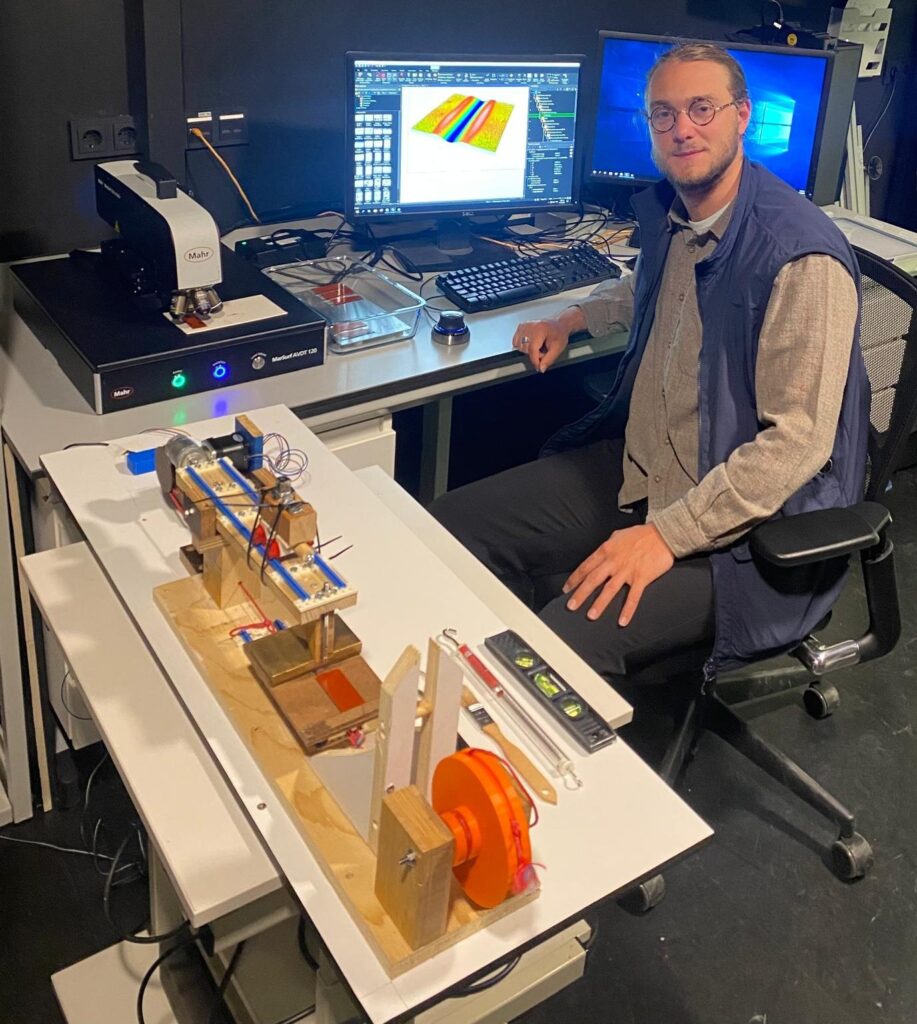
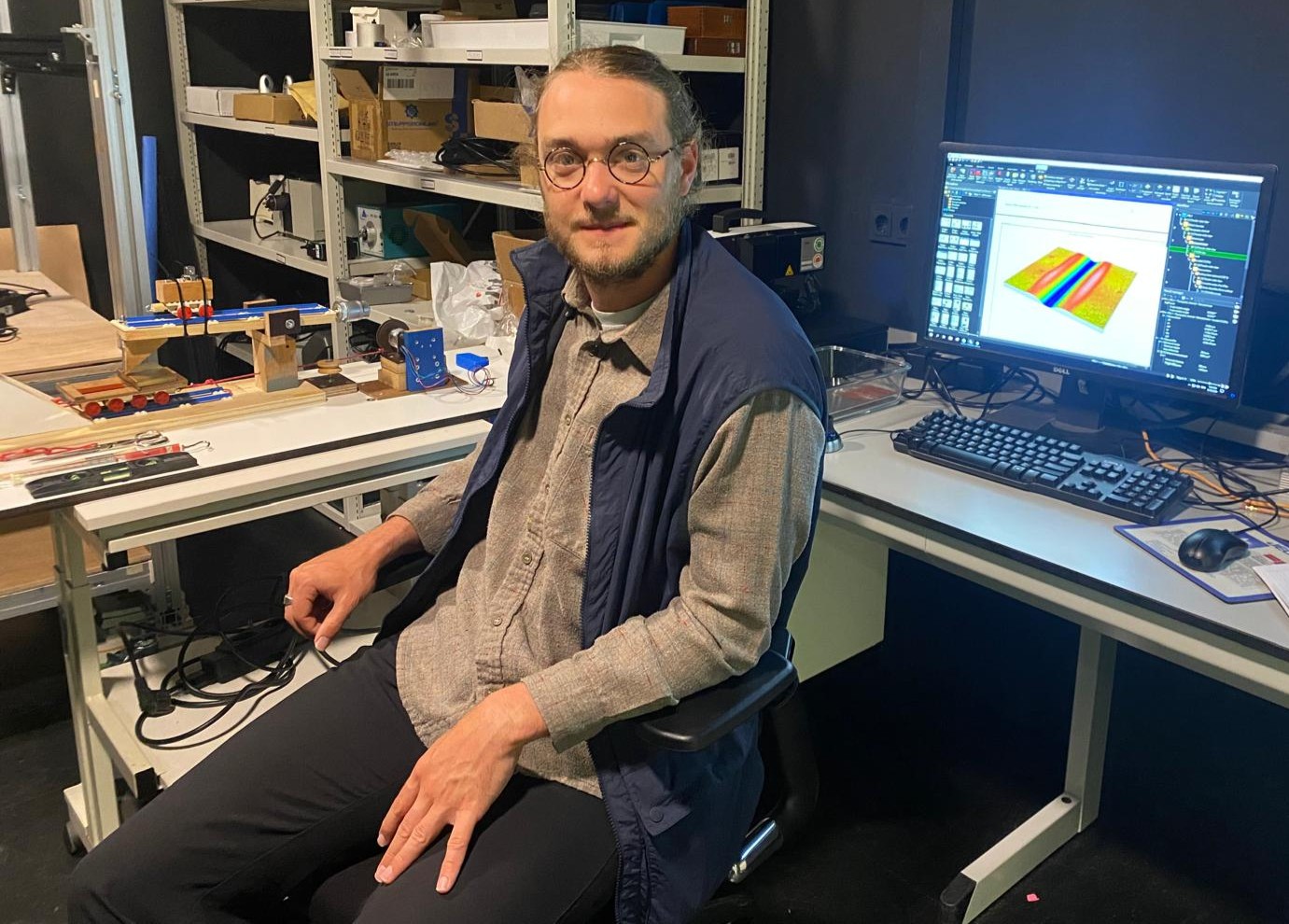
My PhD project is part of the PREPARE project at the University of Amsterdam, within the Chemistry for Conservation and Art group. The project looks at how oil paintings on canvas respond to indoor climate conditions, especially fluctuations in relative humidity and temperature. Many museums and historic interiors are trying to reduce energy use by relaxing strict climate control, but we need better scientific evidence to understand what this means for paintings. In my work, I develop model paint systems that act as reactive dosimeters. These systems are designed to show measurable chemical and mechanical changes when exposed to different climate conditions. I monitor these changes using ATR-FTIR spectroscopy and low-tech mechanical tests, such as scratch and bend tests developed in-house.
Why did you want to do this project? What led you here?
I was drawn to this project because it brings together chemistry and cultural heritage conservation, with a specific focus on painting materials. During my studies and previous work in the field, I became fascinated by how analytical tools can help answer practical questions about the care of artworks. What appeals to me about this project is that it is not only concerned with understanding degradation at a chemical level, but also with making that knowledge useful for conservators, museums, and historic interiors. As a painter myself, the project has also changed how I look at paintings. I now see them less as static objects and more as layered materials that respond to, and interact with, the environments in which they are kept.
What is a challenge you encountered in your PhD and what did you learn from it?
One challenge has been developing mechanical tests that are simple enough to be low-tech, but still reliable and meaningful. For example, interpreting scratch test results is not always straightforward, because paint can soften, recover, crack, or deform in different ways This taught me that method development requires patience and careful observation. A measurement is only useful if you understand what it actually represents. It also reminded me that unexpected results are not necessarily a problem, but often the starting point for better questions.
Théo recently presented his research at a NICAS colloquium, find the recording here:
Théo Fany Lange – NICAS Colloquium