


NICAS Colloquium Online – 26 november 2026
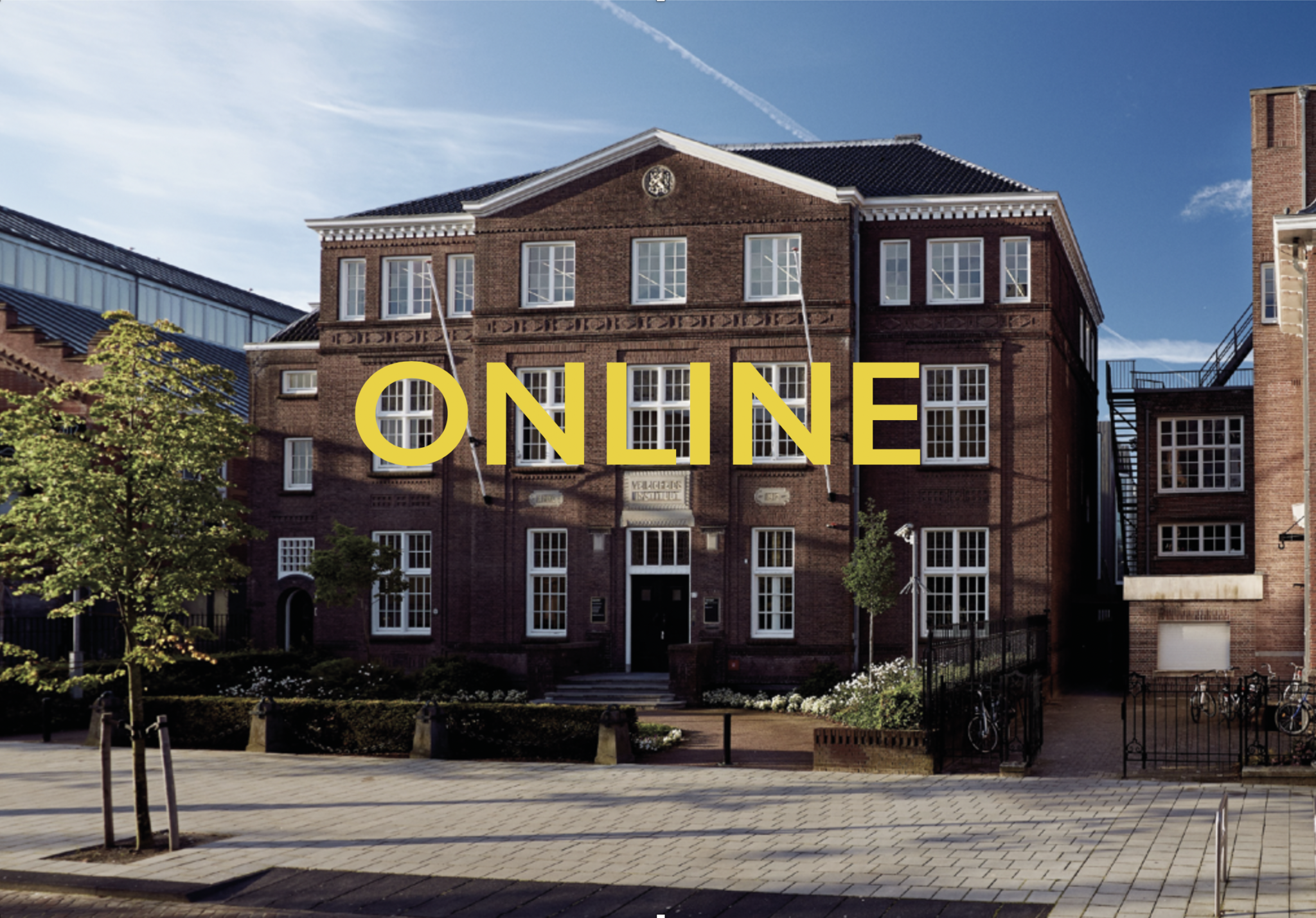
We are pleased to announce a new, online edition of the NICAS colloquium on Thursday 26 november 2026 starting at 12.00 hrs. The colloquium will take place online through Microsoft Teams.
Throughout the year, NICAS organizes a bi-weekly Colloquium featuring short lunch lectures where researchers share updates, present new ideas, or discuss the outcomes of their work. The Colloquium aims to keep the field informed about the latest developments, foster the exchange of knowledge, and encourage collaboration.
This week’s presentations are by Jorien Duivenvoorden (University of Amsterdam) & Michiel Overhoff (University of Amsterdam) and Priscilla Cools (Technical University Eindhoven). The session will be chaired by Dorien Westert (Technical University Eindhoven).
Salt monitoring: in-situ assessment of crystallisation – Project update
Abstract
This talk presents an update on the NICAS Small Project Salt Monitoring: In-situ Assessment of Crystallisation. This project explores portable Fourier-Transform Laser Speckle Imaging (FT-LSI) for the purpose of direct non-invasive monitoring of salt transitions in situ. The presence of soluble salts in porous works of art poses significant risks to their survival. Volume change associated with salt phase transitions, brought on by the interaction with humidity in the environment, causes instability and loss of original material. To prevent phase transitions, the environment around the object should be optimised. Conservators can establish the critical relative humidity that activates the salts to inform such a preventive conservation approach. However, using existing methodologies, it remains unclear how sensitive salts are to short-term fluctuations in their environment, for example caused by heating a space for an event. At present, no tool is available to establish such rapid responses on a site-specific basis. This talk presents the first stage of the project where salt-loaded mock-ups were analysed in a climate chamber.
Biographies
Jorien Duivenvoorden is an assistant professor in the department of Conservation & Restoration of Cultural Heritage at the University of Amsterdam. Jorien is trained as a chemist (University of Amsterdam) and a wall painting conservator (The Courtauld Institute of Art, London, UK). Her PhD research (Rijksmuseum and University of Amsterdam) focused on transport and behaviour of water in oil paintings. Her current research concentrates on climate-induced material degradation and condition monitoring, with a special focus on wall painting. Jorien teaches and co-coordinates the specialisation track ‘Historic Interiors’ within the master and post-master program Conservation & Restoration of Cultural Heritage at the University of Amsterdam.
Michiel Overhoff is a practicing conservator specialized in the conservation of ceramics, stone and related materials. He was trained as a conservator at the University of Amsterdam. Much of his current work focusses on the treatment of cultural heritage suffering from salt-induced damage. Next to his work as a private conservator, Michiel is also a lecturer for the specialization track “Ceramics and Glass” in the master and post-master program Conservation & Restoration of Cultural Heritage at the University of Amsterdam.
Stress development in oil paint under cyclic relative humidity: the role of viscoelasticity, moisture and ageing
Abstract
Oil paintings are sensitive to fluctuations in relative humidity, which can cause paint layers to absorb or release moisture, resulting in expansion and contraction. Because these layers are constrained by a canvas support, such movements can generate internal stresses and contribute to cracking. However, the magnitude of humidity fluctuations alone is insufficient to accurately assess the development of internal stresses.
This study investigates how relaxation, moisture diffusion, and ageing influence stress development under cyclic relative humidity conditions using finite element modelling. The results show that the rate of humidity change matters: faster cycles can produce higher tensile stresses because the paint has less time to relax. Moisture diffusion affects how quickly and where moisture-related stresses develop, while artificially aged paint showed increased stiffness and reduced relaxation time. These findings highlight the importance of considering both environmental fluctuations and changes in the mechanical behaviour of paintings when assessing conservation risk.
Biography
Priscilla Cools is a Structural Engineer and recent graduate of Eindhoven University of Technology. She completed her Master’s thesis in the Department of Applied Mechanics, where she investigated the behaviour of oil paint layers under cyclic relative humidity using finite element modelling. Her research focused on the effects of viscoelasticity, moisture diffusion, and ageing on stress development in paint layers.