What is your PhD project about?
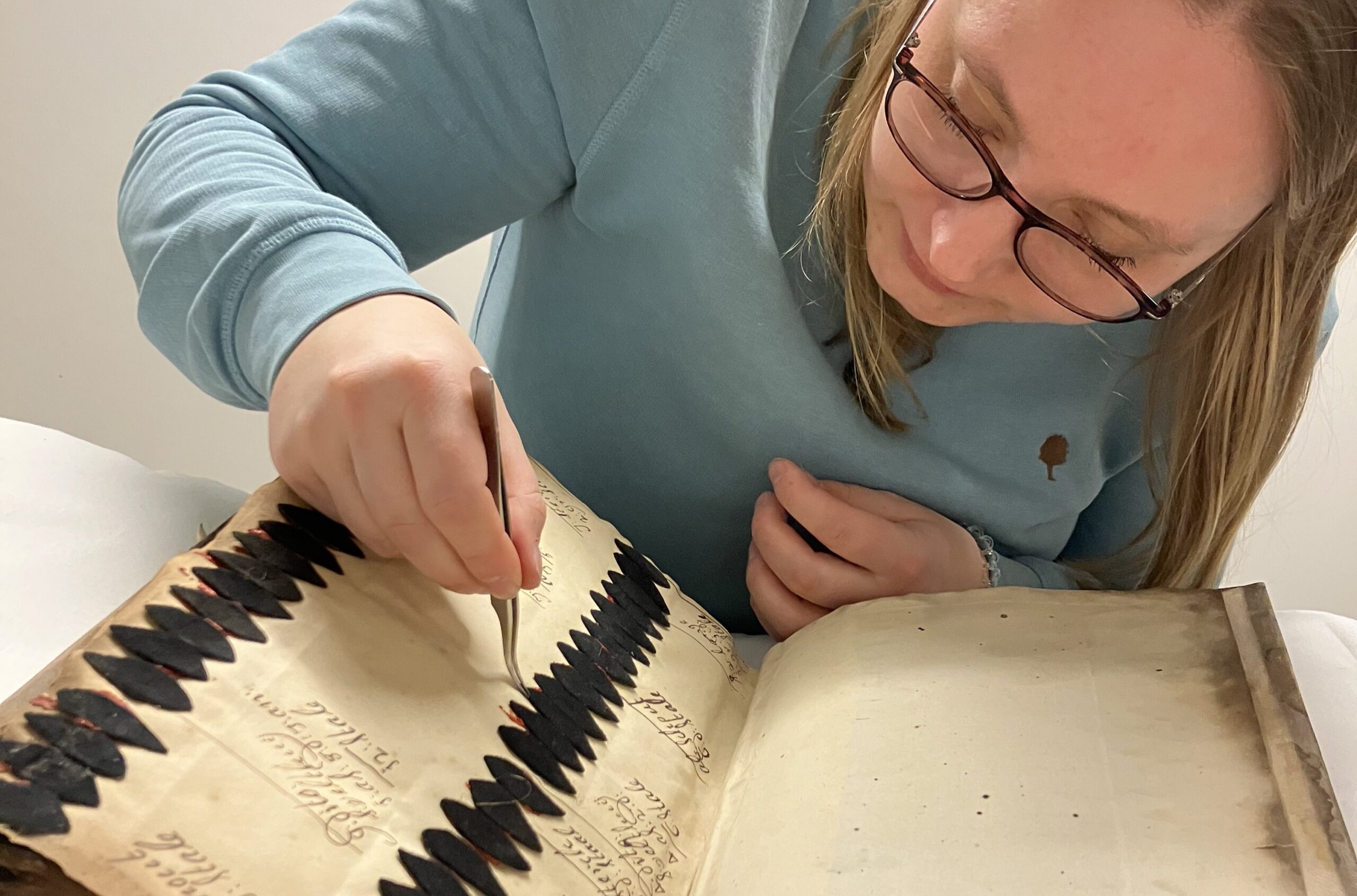
Museum De Lakenhal (Leiden) holds a unique collection of sample books – the Staalmeestersboeken (1690-1794) – with thousands of black-dyed woollen broadcloth samples of different quality grades. These make up the core of NWO-NICAS project Black Magic. Within the books, considerable variation is observed among samples of each quality grade, but the relation to methods for dyeing black is unclear.
Within my PhD research, through technical materials research, I aim to (re)discover the dyeing methods for black broadcloth fabrics in 18th-century Leiden and their relation to the development of quality standards. Three types of research are combined: 1) chemical analysis (e.g. UHPLC-PDA, SEM-EDX) of a selection of samples from the Staalmeestersboeken to characterize dyestuffs and mordants; 2) reconstruction of black-dyed broadcloth after historical dyeing recipes, followed by their thermal ageing and chemical analysis, which increases insights into dyeing methods; 3) investigation of the degradation of black-dyed samples. By connecting the results to the different quality grades, I hope to understand how the regulation of quality standards changed in 18th-century Leiden.
Why did you want to do this project? What led you here?
Prior to starting my PhD, I studied archaeology and chemistry, and I have always been interested in combining these. By applying chemical analysis to cultural heritage objects, you can acquire so much additional knowledge that allows you to reconstruct the stories of the objects, and their makers and users. With the Black Magic project, what immediately stood out to me was its integration of chemistry and cultural heritage: it aims to understand the chemical degradation processes while also focusing on the narratives of the dyers. Dyers used so many different dyestuffs and had very sophisticated knowledge on how to use these to obtain different qualities. The project started the day after I graduated, so that was perfect timing!
What is a challenge you encountered in your PhD and what did you learn from it?
Often experiments do not give the results you had expected and equipment can break down. I am still learning how to find a good balance between making a solid planning and accepting that sometimes work takes more time than expected. I think an important skill to develop during your PhD (which I hope to have achieved by the end it) is a level of flexibility to make do with what you have and still get something out of it in the end, even if it is completely different from what you had initially expected to achieve.
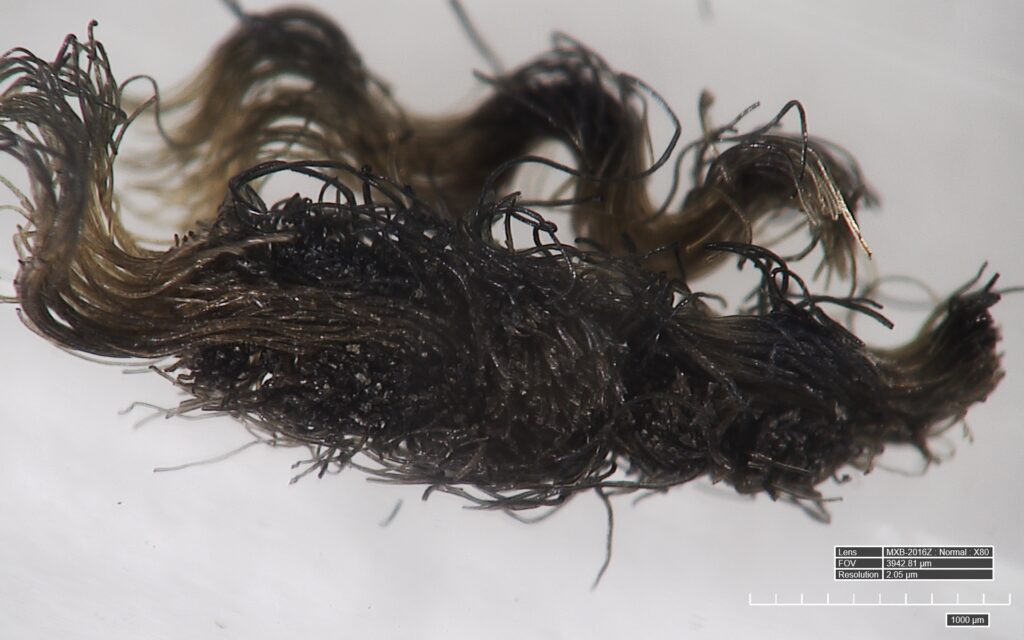
Figure 1: Black-dyed fibre from one of the samples in the Staalmeestersboeken (own photo).
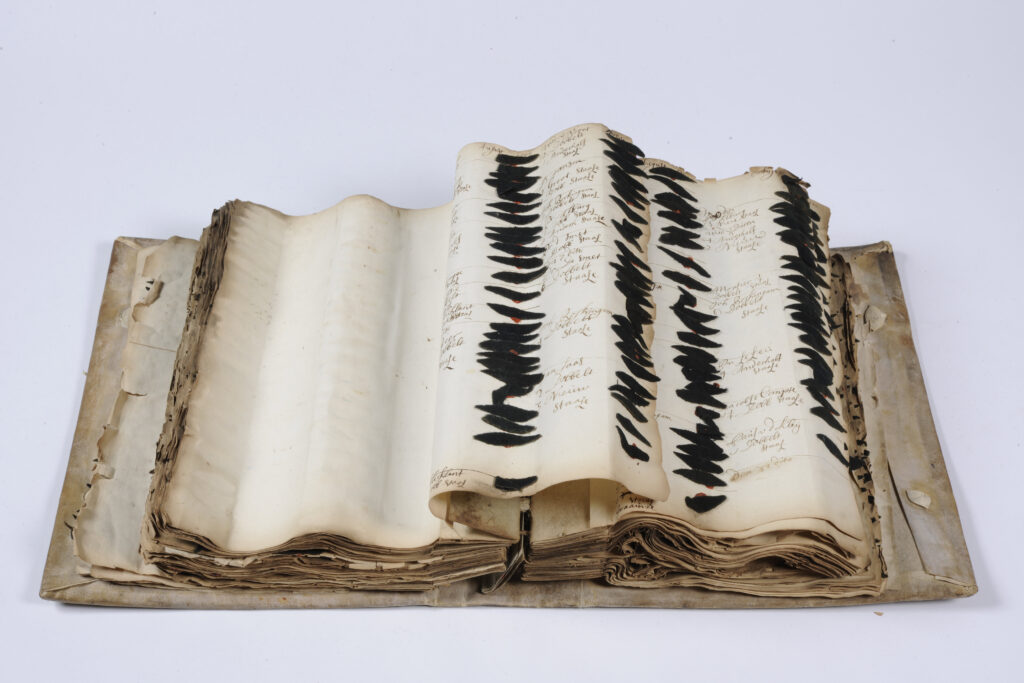
One of the Staalmeestersboeken, dated to 1700 (photocredits: Zofia Zhang).